- +977 1-5368977
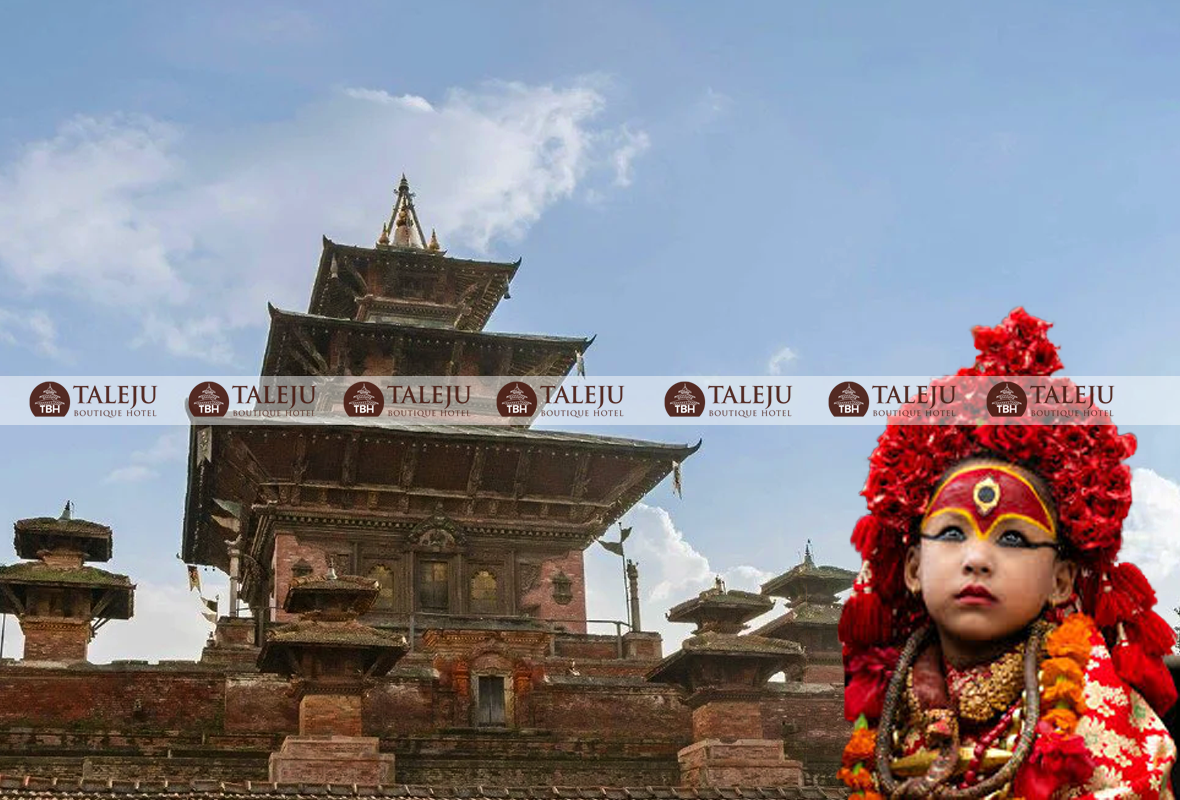
Why Taleju Temple Opens Only Once a Year The Legend of the King, the Goddess, and a Forbidden Gaze
In the heart of Kathmandu’s Basantapur Durbar Square, amidst the bustle of souvenir vendors and the drone of prayer wheels, stands a silent giant. The Taleju Temple, with its three golden roofs piercing the sky, is the tallest structure in the square. Yet, for 364 days a year, it sits in an almost haunting stillness. The main gates are bolted. The guards stand idle. The divine energy inside is locked away, waiting. But then, on one specific morning Mahanawami, the ninth day of the great festival of Dashain the silence shatters.
Thousands of devotees line up before 4:00 AM, snaking through the ancient palace walls. They aren't just waiting to see a statue; they are waiting to meet a goddess who, as legend has it, was once "insulted" by a mortal king and walked away. They are waiting for the day she promised to come back.
Why does this temple, the royal patron deity of Nepal, open its doors only once a year? The answer isn't just a matter of ritual; it is a story of power, lust, dice games, and the birth of the Kumari the Living Goddess.
The Goddess Who Came from the South
To understand the locked gates, we first have to understand the firepower of the deity inside. Taleju Bhawani is not an ordinary village goddess. She is a Tantric manifestation of Durga , the fierce, all-powerful slayer of the buffalo demon, Mahishasura .
Unlike the peaceful idols we often see, the Taleju worshipped inside these walls is a "Tantric" deity one governed by secret mantras, specific geometric yantras (sacred diagrams), and rituals that are too powerful for the public eye.
The Malla kings, who ruled the Kathmandu Valley from the 12th to the 18th century, didn't just choose her. The story goes that in the 14th century, King Harisimhadeva of the Karnata dynasty (in present-day Simraungadh) was fleeing a Muslim invasion. According to legend, he received a divine dream instructing him to retrieve the sacred Shri Yantra of Goddess Taleju from the Sarayu River. He carried this spiritual energy north to Bhaktapur .
When he settled in the valley, the Malla kings adopted her as their Kuladevi (clan deity). To the outside world, the King ruled from the throne. But in the Tantric tradition, the King was merely the goddess's regent on Earth. His power to rule was literally "borrowed" from her.
The Dice Game That Changed History
The specific reason the doors remain locked comes from the reign of King Jaya Prakash Malla (or sometimes attributed to other Malla kings depending on the city, specifically Bhaktapur). Here is the version that gives you chills. Legend says the goddess loved King Jaya Prakash Malla so much that she would visit his palace almost every night. Disguised as a beautiful, ordinary woman, she would sit with the King and play Tripasha (an ancient dice game). She didn't just come for fun. She came to strategize. They would discuss affairs of state, war tactics, and the welfare of the citizens. The King knew he was speaking to the divine, and for a while, he respected the boundary.
But as the nights wore on, familiarity bred a dangerous disrespect. According to oral tradition, one night, the King began to look at the goddess not as a devotee looks at a deity, but as a man looks at a woman. He harbored an impure intention a lustful gaze. The goddess, who embodies the supreme power of the universe, felt the shift in the air immediately. Her eyes flashed with fire. In that instant, she vanished into thin air. The palace chamber, once glowing with divine light, plunged into darkness and cold . The King was devastated. Without her, he was just a man sitting on a stone throne. His kingdom would surely fall.
The Promise of Return
The King begged for forgiveness. He performed severe penances. Moved by his genuine remorse (and perhaps the fate of the kingdom), the goddess appeared to him in a dream.
"I cannot return to you in my physical form," the goddess declared, according to the lore passed down by the priests of the Hanuman Dhoka Palace. "Your mortal eyes and mortal desires have polluted my space." But she did not abandon him completely. "I will return to the temple only once a year," she told him. "On the day of Mahanawami, I will re-enter that space so that my people can receive my blessings. For the rest of the year, I will vanish from your sight."
However, there was a second part to the dream a solution. The goddess proposed a new arrangement. If she would no longer appear as a woman, she would instead "inhabit the body of a virgin child." She explained that a young girl, untouched by the material world and free from impure thoughts, would become her physical vessel. And so, the Kumari Tradition was born. The King ordered the search for a young girl from the Shakya (gold/silver smith) clan with the "32 Lakshanas" (perfections of a goddess). She would be worshipped as the living Taleju until she reached puberty.
This is why the massive temple of Taleju is closed 364 days a year. The goddess moved out of the wooden pagoda and into the Kumari Ghar (the Kumari's residence just down the street). The King no longer had to go to the temple to see her; she lived in his palace.
The One Day the Gates Fly Open
So, why bother opening the temple at all if the goddess lives in the Kumari?
Because on Mahanawami, the raw, original, "Tantric" force of Taleju returns to her temple base.
On this day, the strict rules of the monarchy are suspended for just a few hours. Usually, only high priests and the royal family are allowed beyond the golden doors. But on Mahanawami, the floodgates open.
Worshippers who have fasted for days climb the 12-stage brick plinth (representing the 12 forms of the goddess or 12 zodiac signs). They rush to the Mulchowk courtyard.
Here is the visceral reality of this "Once a Year" opening:
The Queue: Lines begin forming as early as midnight. By 4 AM, the line stretches across Basantapur, the historic square.
The Sacrifice: Inside the courtyard, a specific tantric ritual occurs. While the public focuses on flowers and incense, the royal priests perform secret rites. It is said that 54 he-goats and 54 he-buffaloes are sacrificed at midnight to appease the goddess's fierce form (the "Mahakali" aspect).
The Darshan: Devotees believe that seeing the main idol of Taleju on this specific day is equivalent to a lifetime of worship. They push through the narrow stone passage to receive the "Jamara" (barley shoots) blessed by the goddess.
The Architecture of Secrecy
Walking around the temple today, you can feel the secrecy baked into the bricks. Located within the Hanuman Dhoka Palace complex, the Taleju Temple is positioned so that the King didn't have to walk far from his bedchamber to consult the goddess. It was his private chapel.
Look closely at the Golden Gate (Sun Dhoka) in Patan or the carvings in Kathmandu. You will see intricate Tundals (wooden struts) depicting the goddess in her various forms, including the terrifying Ugra Chandi (the fierce one) with eight arms holding weapons.
Unlike the Buddhist stupas that welcome everyone, this is a Tantric space. For centuries, foreigners and non-Hindus were strictly forbidden. Even today, while the rules are slightly relaxed for the one-day opening, the inner sanctum retains a heavy, secretive atmosphere.
You can't take pictures inside. You can't speak loudly. And you certainly can't look at the main idol with a wandering eye the King learned that lesson the hard way.
More Than a Myth
This story is not just a fairytale to scare children. It is the constitutional history of Nepal.
For centuries, the legitimacy of the King rested on this dice game. If the goddess stopped talking to the King, the people would stop listening to the King. Even after the Shah kings (who unified Nepal) replaced the Malla kings, they continued this exact tradition of worship.
When the monarchy was finally abolished in 2008, many wondered what would happen to Taleju. Interestingly, the tradition continues. Even the democratically elected Prime Ministers and the current President pay homage to the Kumari and the Taleju temple during Dashain.
The "curse" of the forgotten gaze is still taken very seriously. It is believed that if the Living Goddess (Kumari) cries or leaves her residence in anger, a national calamity or the fall of the government is imminent.
Visiting Taleju
If you are standing in Basantapur today, you can walk right up to the massive brick plinth of the Taleju Temple. You can run your hands over the red bricks that are centuries old. You can look up at the golden roofs glittering in the sun.
But you cannot walk through the main door. Not unless you have a time machine set to September/October.
If you want to be one of the lucky few this year:
· The Date: Mahanawami (Day 9 of Dashain). This usually falls in September or October.
· The Time: Gates open around 4:00 AM and close by Noon.
· The Etiquette: You will be in a pushing, screaming crowd. Offerings include coconut, eggs, flowers, and sometimes, a male animal sacrifice (goat or buffalo) if you are seeking major favors.
· The Vibe: Don't expect a peaceful yoga retreat. Expect drums, blood, bells, and a chaos so ancient it feels like stepping back into the 16th century.
The Verdict
We love stories about locked doors. The Taleju Temple isn't just locked for maintenance or security. It is locked because a King broke a sacred promise. It is locked because the divine is too hot to handle for mortal eyes.
The "Why Taleju Temple Opens Only Once a Year" is not a travel hack; it is a morality play. It is a warning about the price of desire and the power of a woman who refuses to be objectified.
Next time you see the shut doors of a pagoda, remember: they aren't always locked to keep you out. Sometimes, they are locked because what's inside walked out in a huff 400 years ago and never came back except for a single morning during the harvest moon.
Have you ever witnessed the chaos of Dashain in Kathmandu? Or are you brave enough to stand in that 4 AM queue? Share your thoughts below.


