- +977 1-5368977
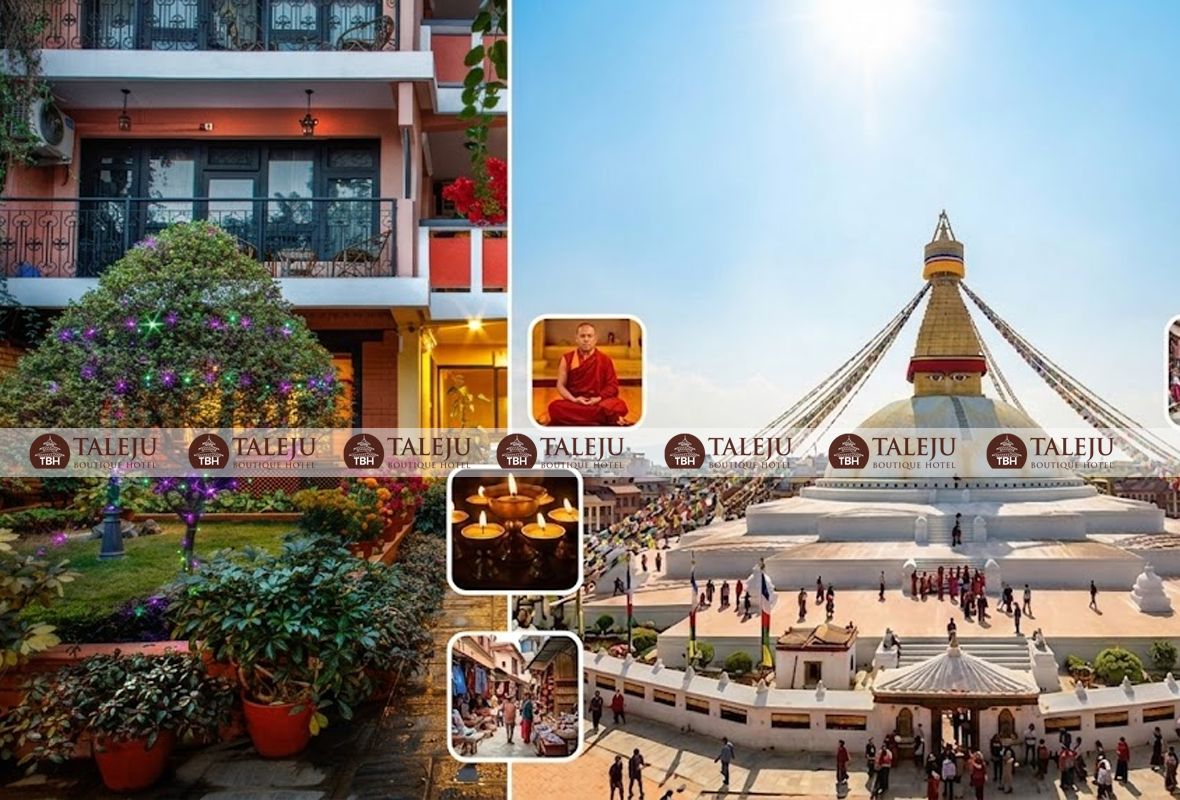
Staying at Taleju Boutique Hotel, Why Boudhanath Stupa Should Be on Your Itinerary in Nepal
For a traveler nestled in the heritage-rich corridors of Taleju Boutique Hotel, the city of Kathmandu often feels like a living museum. While the hotel itself is a sanctuary of Newari craftsmanship in the heart of Jyatha, stepping outside opens up a world of spiritual landmarks. Among them, the Boudhanath Stupa stands as an unmissable giant. Located just about 6 km from your doorstep, this UNESCO World Heritage Site is not just a monument; it is the beating heart of Tibetan Buddhism in Nepal. Here is why making the journey from Taleju Boutique Hotel to Boudhanath is the single best decision you can make for your Kathmandu itinerary.
1. A Seamless Transition from Boutique Luxury to Ancient Spirituality
Staying at Taleju Boutique Hotel means you are already immersed in a specific kind of beauty traditional wood carvings, red brickwork, and a quiet courtyard that feels miles away from the Thamel bustle.
Traveling to Boudhanath extends this experience. The transition from the intricate, "indoor" heritage of your hotel to the massive, "outdoor" spiritual scale of the Stupa feels like a natural progression. While Taleju offers a private retreat, Boudhanath offers a communal one. It is where the intimate art of the Newars meets the cosmic architecture of the Himalayas.
2. The Energy of the Morning Kora
If you are an early riser, ask the hotel staff to arrange a taxi around 6:00 AM. Arriving at Boudhanath at dawn is a transformative experience.
You will join hundreds of locals and monks in the Kora the ritual circumambulation of the stupa in a clockwise direction. The air is thick with the scent of burning juniper and the low hum of the mantra Om Mani Padme Hum. For a guest at a boutique hotel who values authenticity, this is as real as Kathmandu gets. There are no "tourist performances" here; just centuries of devotion in motion.
3. A Masterclass in Sacred Architecture
Boudhanath is one of the largest spherical stupas in the world. Its design is a physical representation of the Buddhist cosmos:
· The Base: Represents the Earth.
· The Dome: Symbolizes Water.
· The Square Tower: Represents Fire (adorned with the all-seeing eyes of the Buddha).
· The Spire: Symbolizes Air.
· The Pinnacle: Represents Ether or Space.
From your base at Taleju, you’ve seen the "human-scale" beauty of Kathmandu’s alleyways. Boudhanath provides the "divine-scale" perspective. Standing at the base of the white dome and looking up at the golden spire is a humbling reminder of the valley’s deep-rooted history.
4. The "Little Tibet" Experience
The area surrounding the stupa is often called "Little Tibet." After the 1950s, many Tibetan refugees settled here, bringing with them a rich tapestry of culture, food, and art.
Monasteries (Gompas): There are over 50 monasteries in the immediate vicinity. Many, like the Guru Lhakhang Monastery, welcome respectful visitors to observe evening prayers.
Traditional Art: You will find the best Thangka painting schools in the city here. Unlike the souvenir shops in Thamel, many artists in Boudhanath are painting for religious use, offering a deeper look into the symbology of the art.
5. Rooftop Dining with a View
One of the logistical perks of visiting Boudhanath is the layout. The stupa is surrounded by a circular plaza lined with buildings. Almost every building has a rooftop cafe.
After a morning of walking, you can sit on a balcony at places like Cafe du Temple or Roadhouse and watch the world go by from above. It is one of the few places in Kathmandu where you can enjoy a high-quality espresso or a traditional bowl of Thenthuk (Tibetan hand-pulled noodle soup) while staring directly into the eyes of a 1,500-year-old monument.
6. Proximity to Pashupatinath
For guests at Taleju Boutique Hotel, efficiency is key to a good itinerary. Boudhanath is located very close to Pashupatinath, the holiest Hindu temple in Nepal.
By heading to this side of town, you can easily visit both sites in a single afternoon. You can witness the Buddhist peace of Boudhanath and then walk (or take a 5-minute drive) to see the powerful evening Aarti (fire worship) on the banks of the Bagmati River at Pashupatinath.
Conclusion: A Day Well Spent, A Soul Refreshed
As the sun begins to set over the white dome of Boudhanath and the butter lamps start to flicker in the surrounding monasteries, you’ll feel a sense of peace that is hard to find anywhere else in the world. But as the evening chill settles over the valley, the thought of returning to the warm, wood-scented halls of Taleju Boutique Hotel becomes the perfect end to your day.
The beauty of staying in a heritage property like Taleju is that the " Nepal experience" doesn’t stop when you close your hotel room door. You transition from the spiritual grandeur of the Stupa back to the intimate, refined craftsmanship of your Newari-inspired suite. Whether you choose to end your night with a glass of wine on the hotel’s terrace or a quiet moment in the courtyard, the energy of Boudhanath stays with you.
Kathmandu is a city of contrasts loud yet peaceful, ancient yet evolving. By placing Boudhanath Stupa at the top of your itinerary, you aren’t just visiting a landmark you are witnessing the living pulse of the Himalayas. And by choosing Taleju Boutique Hotel as your base, you ensure that your stay in Kathmandu is as authentic, comfortable, and memorable as the city itself.
Ready to Explore the Magic of Kathmandu?
Don’t just read about the heritage live it. Book your stay at Taleju Boutique Hotel today and position yourself in the heart of the city’s cultural wonders. From our doorstep to the eyes of the Buddha, your Nepalese adventure awaits.


